The Rotorazer Saw is not a tile saw in the traditional sense. It is a compact circular saw with a small blade and a set of interchangeable cutting wheels, sold as a multi-material tool that handles drywall, tile, grout, metal, pipe, PVC, plastic and copper. The listing presents it as a 2026 model with more power and deeper cuts than the version it replaces. That framing matters, because the tool’s strengths and its limits both flow from the same design decision: one small saw doing many jobs rather than one job done well.
What the Rotorazer Saw Platinum Actually Is
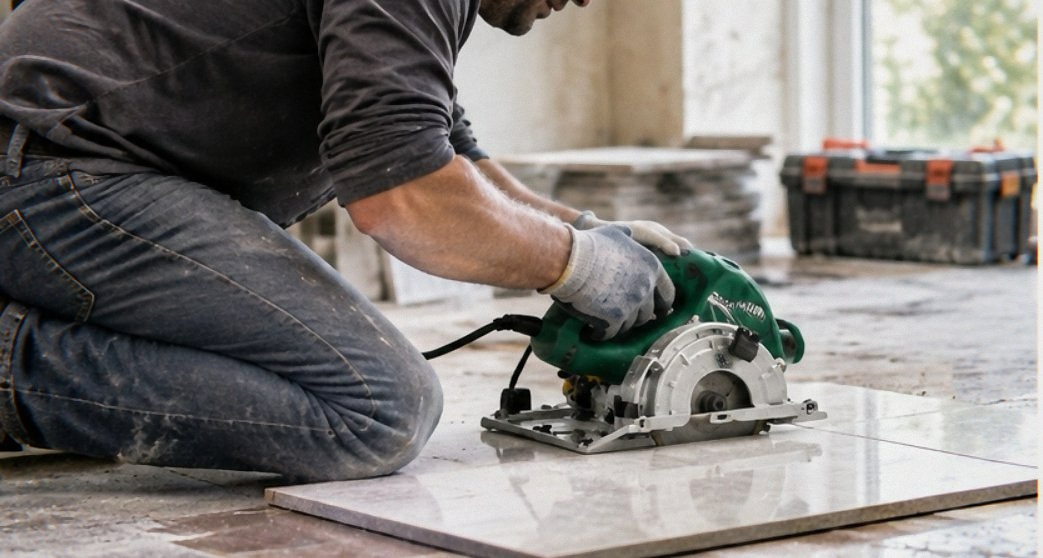
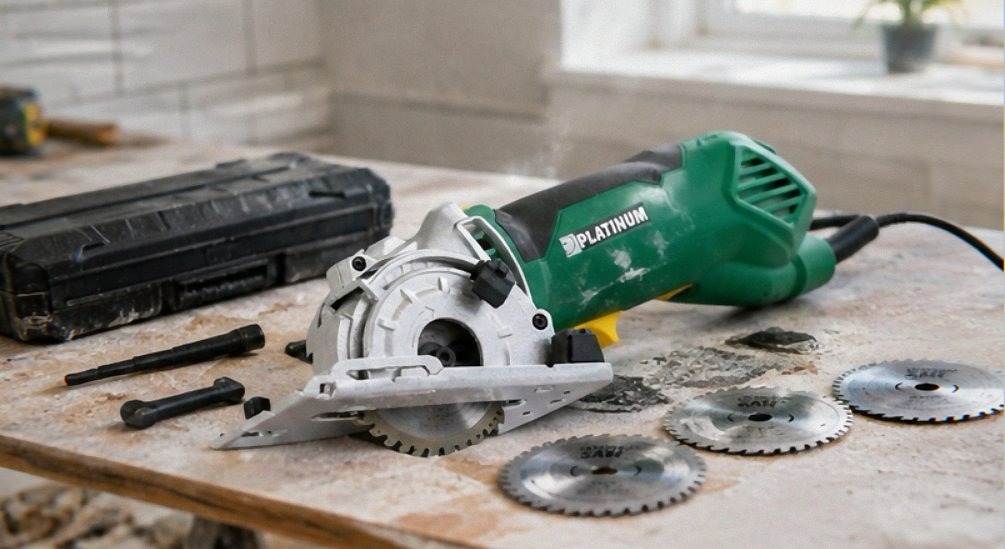
The package is a compact circular saw body plus a set of blades for different materials, sold in green. The blade is small, the body is handheld, and the tool runs on mains power rather than a battery pack. That combination is what makes it usable in tight spaces: against a wall, inside a cabinet, along a floor edge where a full-size wet saw would never fit.
Compact circular saw, not a benchtop wet saw
A benchtop wet saw holds the tile on a sliding table and passes it through a water-cooled blade. The Rotorazer Saw does the opposite: you hold the tool and move it across the material. That is a different skill, a different finish quality, and a different dust situation. It is also the only reason a tool this size can cut tile that is already fixed to a wall.
The 2026 model claims more power and deeper cuts See Today’s Deal on Amazon
The listing’s headline claims are extra power and deeper cuts than the previous generation. Deeper cuts matter for thicker tile and for cutting through grout lines next to an existing installation, where you need the blade to reach past the surface layer. Amazon’s listing does not publish a maximum cut depth in the specifications shown, so treat the depth claim as a directional improvement rather than a number you can plan a job around.
Cutting Tile Dry: What Changes in Practice
Dry cutting with an abrasive or diamond wheel produces dust, heat and a rougher edge than a wet saw. None of that is unique to this tool; it is what dry cutting is. What matters is whether the trade-offs are acceptable for the job in front of you.
Dust control is on you
There is no water feed on this saw, so the dust goes into the air unless you manage it. A shop vacuum held near the cut line, a dust mask, and a closed door between the work area and the rest of the house are the practical minimum for anything beyond a couple of cuts. Buyers who assume a dry saw means a clean job should price in the dust management before they order.
Edge quality on visible cuts
Dry cuts on porcelain and harder ceramic tend to chip along the cut edge more than wet cuts do. For cuts that will be hidden under trim, behind a fixture, or covered by a transition strip, that is fine. For a visible cut on a polished tile face, plan on finishing the edge or accepting a rougher line. This is a property of dry cutting generally, not a defect in this particular saw.
Grout and mortar removal
Cutting out old grout along a tile joint is one of the jobs this class of tool is genuinely good at, because the blade reaches into the joint and the compact body fits along a wall. The listing names grout explicitly. This is the use case where a compact dry cutter earns its place even in a workshop that already owns a wet saw.
Where a Compact Saw Beats a Full-Size Wet Saw
The case for this tool is not that it cuts tile better. It is that it cuts tile in places a wet saw cannot go.
- Cutting installed tile. Removing a damaged tile, cutting a hole for a new outlet, or trimming tile that is already fixed to a wall. A wet saw cannot do any of these.
- Small jobs where setup costs more than the work. A wet saw needs water, a level surface, and a drain-down afterwards. For four cuts in a bathroom, that setup can take longer than the cutting.
- Mixed-material renovation. The same tool is listed for drywall, PVC, copper and pipe, so a remodel that touches several materials needs one tool rather than four.
- Storage. A compact saw takes a shelf. A benchtop wet saw takes a corner of the garage and stays there.
Where It Falls Short
It will not replace a wet saw for a full tile floor
For a large-format tile floor, a wet saw is the right tool. It cuts faster, cuts cleaner, and handles long straight runs that a handheld saw struggles to keep true. Anyone tiling a whole room should buy or rent a wet saw and treat this as a supplement, not a substitute.
Long straight cuts are harder to keep accurate
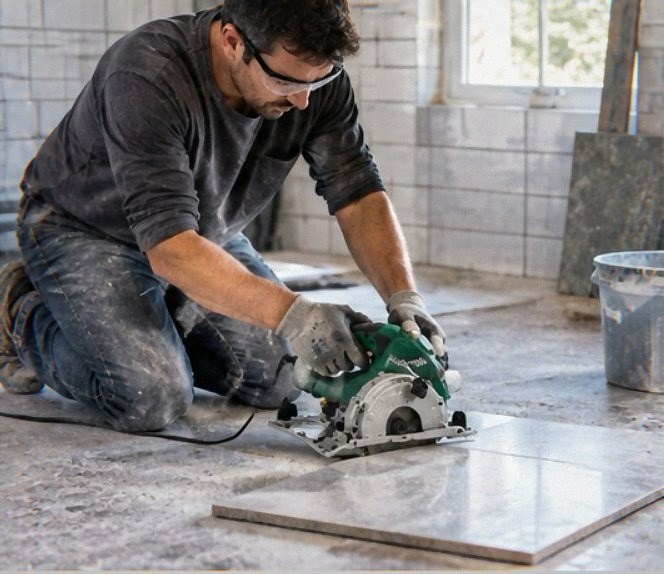
Freehand cutting across a tile gives you a line as straight as your hand. A rip guide or a clamped straightedge helps, but the tool’s geometry is designed for access and portability, not for long precision runs. This is the single biggest reason a buyer might be disappointed if they expected benchtop accuracy.
The multi-material pitch cuts both ways
A saw sold for drywall, tile, grout, metal, pipe, PVC, plastic and copper is a compromise across all of them. It is a reasonable answer for a homeowner doing varied small jobs and a poor answer for a tradesperson who cuts tile all day and needs a tool that is good at one thing.
Blade cost over time
Abrasive and diamond wheels wear. On tile and grout, expect to replace cutting wheels as they dull, which is an ongoing cost on top of the $164.76 purchase price. Amazon’s listing does not quote blade life, so budget for replacements rather than assuming the included wheels last the life of the tool.
What the 4.3-Star Rating Does and Does Not Tell You
The rating is 4.3 out of 5 across 80 ratings on the current listing. That is a solid but not exceptional score, and the sample is small enough that a handful of ratings moves it. Amazon does not break the rating down by use case, so a 4.3 across a tool sold for eight different materials does not tell you how it performs on tile specifically. Treat the rating as evidence that most buyers got a working tool, not as evidence that it is a good tile cutter.
If you buy through a link on this page I may earn a small commission. It does not change what you pay.
How to Choose a dry tile saw for Your Job
Three criteria decide whether this class of tool is right for you.
Does the tile need to be cut in place, or can it come to the saw?
This is the first question, and it rules in or out most of the category. If the tile is already fixed to a wall or floor, you need a handheld tool and the Rotorazer Saw is a legitimate answer. If the tile is loose and you are cutting it on a bench, a wet saw is the better tool and this purchase is a compromise.
How many cuts, and how visible are they?
A handful of cuts that will be covered by trim or fixtures is a good fit for dry handheld cutting. Dozens of cuts with exposed edges is not. Count the cuts before you buy, not after. See Today’s Deal on Amazon
What else in the job needs cutting?
The Rotorazer Saw’s value depends partly on whether you will use the other blades. If the same renovation involves cutting drywall, pipe or PVC, one tool covering all of it makes more sense than buying a tile cutter plus a separate multi-material saw. If tile is the only material involved, you are paying for blades you will not use.
Verdict: Who Should Buy the Rotorazer Saw Platinum
Buy it if you are a homeowner or light renovator who needs to cut installed tile, remove grout, or handle a small mixed-material job in a space where a wet saw will not fit and the setup would cost more than the work. The current price on Amazon is $164.76, and at that figure it competes with a mid-range benchtop wet saw, so the decision is really about access versus accuracy.
Do not buy it if you are tiling a floor or a full wall from scratch. A wet saw costs similar money, cuts cleaner and faster, and does not leave you fighting a dust cloud. That buyer should spend the same budget on a benchtop wet saw and rent a handheld cutter for the few in-place cuts.
If you have no strong preference and just want one tool for occasional tile work around the house, this is a reasonable default, but check two things before ordering: whether the listing’s current blade kit includes a tile-rated wheel, and whether the maximum cut depth covers the thickness of your tile. Neither figure is published clearly on the listing shown here, and both decide whether the tool can do your job at all.