Look, I get it. You’re standing in the tile aisle at Home Depot, looking at the $700 wet saws, and you’re wondering if you really need to drop that kind of cash just to cut some subway tile for a backsplash. The answer is no. You don’t. But you also don’t want to buy some piece of junk that’s going to chip every tile you run through it and leave you with edges that look like a beaver chewed them.
That’s where the SKIL 3540-02 comes in. This thing has been sitting on shelves for over a decade, and it’s still the go-to budget wet saw for weekend warriors. I’ve used mine for three bathroom floors, a kitchen backsplash, and a fire pit project that I’m still slightly embarrassed about. Here’s the real story.
Why I Bought This Thing Instead of Renting
Renting a tile saw from The Home Depot costs about $60 a day, and that’s if you get it back before 6 PM. For a weekend project, that’s $120 minimum, and you’re still hauling a 70-pound monster in your trunk. The SKIL is $109, and you own it forever. The math isn’t hard.
But here’s the thing nobody tells you about budget tile saws: they’re only good if they can actually cut straight. I had a cheapo 4-inch angle grinder setup before this, and let me tell you, trying to score and snap porcelain tile is like trying to cut a steak with a spoon. You end up with a pile of jagged shards and a lot of wasted tile.
The SKIL 3540-02 had decent reviews online, so I pulled the trigger. Worst case, I’d return it and rent one. That was three years ago, and the thing is still sitting on my workbench, covered in dried thinset and dust.
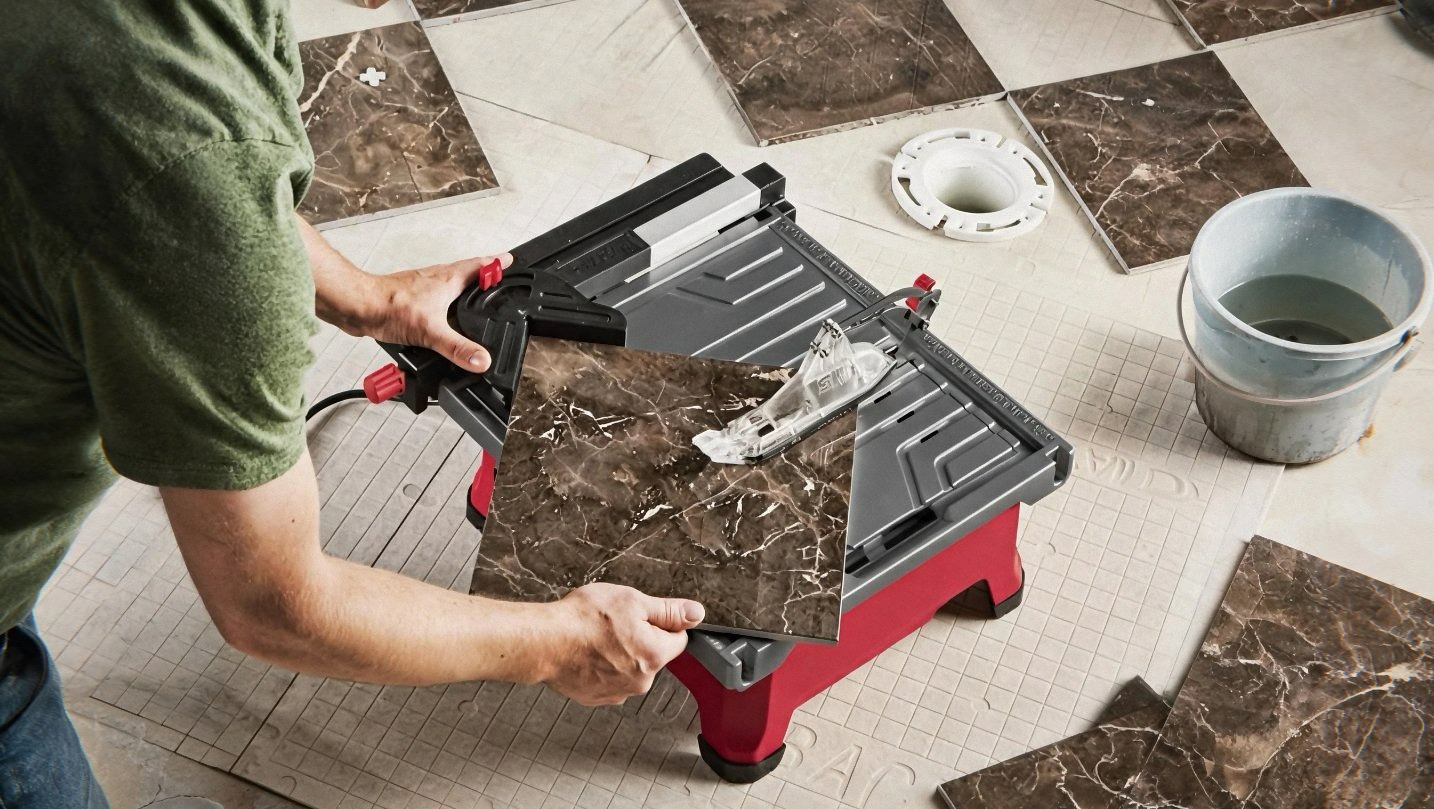
The Cutting Deck and Fence: Where It Wins
The first thing you’ll notice when you unbox this thing is the table. It’s 19.5 inches long, which sounds small on paper, but in practice it handles most tiles you’ll actually cut in a residential setting. The sliding table moves on rails that are, honestly, smoother than they have any right to be at this price point.
The fence is where this saw really earns its keep. It locks down solid and stays square. I’ve seen $400 saws with fences that wobble after a few months. The SKIL’s fence is simple, but it doesn’t move. Once you lock it, it’s locked. I’ve cut hundreds of tile on this thing and the fence hasn’t drifted a millimeter.
The miter gauge is a nice touch too. It clicks into 45-degree angles, which sounds basic, but you’d be surprised how many budget saws just give you a protractor and let you eyeball it. For cutting corner pieces on a bathroom floor, the 45-degree detent is a lifesaver.
The Motor: 7-Inch Blade, 4.8 Amp, Zero Complaints See Today’s Deal on Amazon
Specs say it’s a 4.8-amp motor spinning a 7-inch blade at 3,800 RPM. That’s not going to win any drag races, but here’s the thing about wet tile saws: speed isn’t what makes a clean cut. It’s consistency. The SKIL’s motor doesn’t bog down when it hits a hard spot in a porcelain tile. It just keeps chugging along.
I’ve cut 12x24-inch porcelain tile with this saw. You have to take it slow and let the blade do the work, but it gets the job done. The manual says it can handle tiles up to 14 inches wide with a rip cut, but that’s if you’re cutting diagonally. Straight cuts on 12-inch tile are no problem at all.
One thing to watch: the saw doesn’t have soft start. When you flip the switch, it’s full power immediately. That means you want to make sure the blade is clear of the tile when you turn it on. I learned that the hard way and chipped a piece of travertine on my first day with the saw. Operator error, not the saw’s fault.
The Water System: It’s Messy, But It Works
The SKIL uses a submersible pump that sits in a collection tray. Water gets pumped up to the blade, and there’s a splitter that directs flow to both sides. It’s not pretty, and it does sling water everywhere, but it does the job. The blade stays wet, which means the cuts stay clean and you’re not breathing silica dust.
The pump is rated for 850 GPH, which is overkill, but that’s fine. More water means less heat and less chipping. The collection tray holds about 2.5 gallons, so you’ll need to top it off every 20 minutes or so on a busy day. For a half-bath floor, you’ll probably fill it twice.
If you’re cutting a lot of tile, I’d recommend picking up a small bucket and a separate pump. The tray works, but it’s shallow, and if you’re not careful, water will slosh out the sides when you’re pushing tile through. I ended up putting a 5-gallon bucket underneath with a hole cut in the tray, which is a hack I’ve seen on a few forums.
Speaking of hacks, while I was setting this up, it reminded me of the quirks I found on the Skil 3550-02 7-Inch Wet Tile Saw with HydroLock Water Containment System last month. That one’s got the water containment thing going on, which is nicer if you’re working in a finished space. The 3540-02 is definitely an outdoor or garage tool. You don’t want this thing running on your kitchen floor.
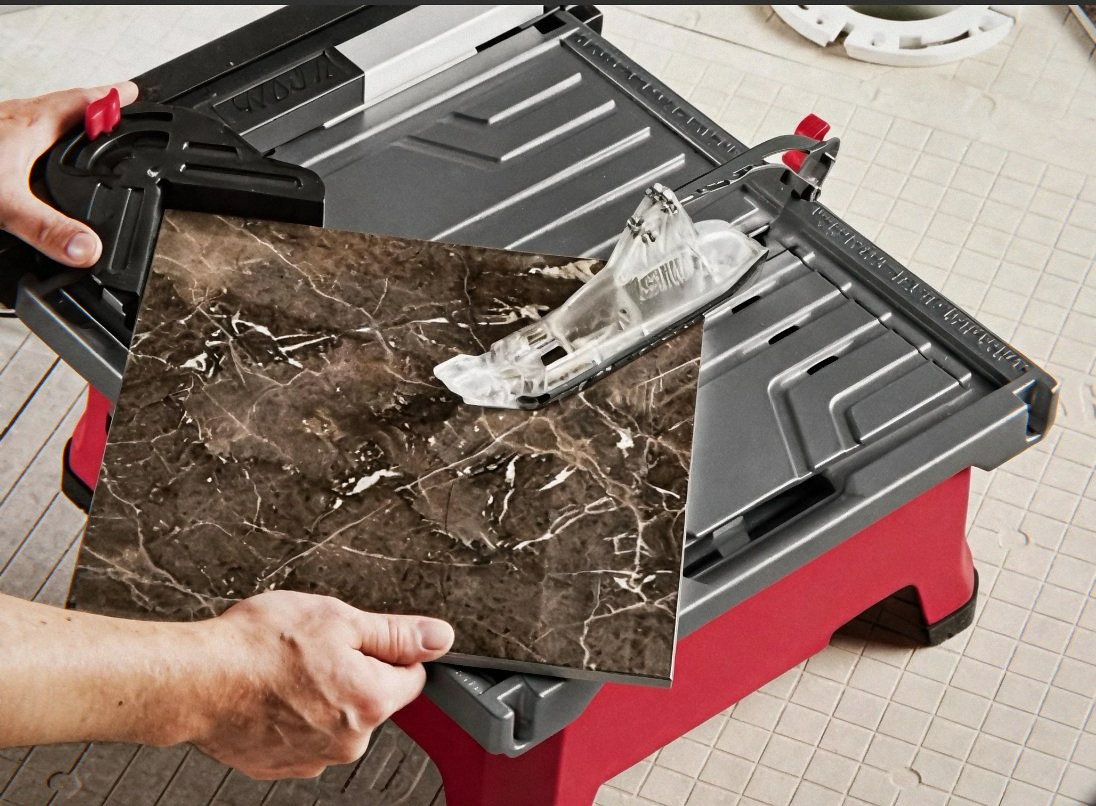
The Blade: Replace It, But Not Right Away
The saw comes with a continuous rim diamond blade. It’s not the best blade I’ve used, but it’s not garbage either. I got through my first bathroom floor (about 60 square feet of 12x12 ceramic) without changing it. It started to slow down on the second project, and I swapped it for a better blade.
Here’s my advice: use the stock blade until it starts to feel slow, then upgrade. You’ll know it’s time when you’re pushing harder and the cuts start getting rough. A good 7-inch continuous rim blade costs about $25, and it makes a noticeable difference on porcelain.
Don’t bother with the segmented blades unless you’re cutting really hard material. They cut faster but leave a rougher edge. For most residential tile, you want the continuous rim.
The Base and Mounting: Where It Gets Annoying See Today’s Deal on Amazon
Okay, I said I’d be honest, so here’s the bad part. The base is thin stamped steel, and it’s not perfectly flat. I noticed a slight bow in the middle when I first set it up. It’s not enough to affect your cuts, but it does mean the saw rocks slightly if you don’t have it on a level surface.
You also need to mount this thing or at least clamp it down. There are pre-drilled holes in the base, which is good, but the legs are sold separately. Yes, you read that right. The $109 price doesn’t include legs. You’re expected to set this on a workbench or a couple of sawhorses.
I built a quick plywood platform for mine and mounted the saw to it with four lag bolts. That solved the rocking problem and gave me a place to set tiles while I was cutting. If you’re planning to use this saw on a regular basis, I’d recommend doing something similar. It takes twenty minutes and makes the saw feel like a much more expensive tool.
One more thing about the base: the water tray slides underneath it, and it’s a little fiddly to get in and out when the saw is mounted. You’ll figure out the trick, but it’s annoying the first few times. I ended up leaving mine in place and just using a siphon to drain the water when I was done.
Cutting Results: The Proof Is in the Tile
I’ve cut ceramic, porcelain, and a little bit of natural stone with this saw. The porcelain cuts clean with minimal chipping on the top edge. You’ll get a tiny bit of chip-out on the bottom edge, but that’s true of every wet saw, even the $1,000 Felker models.
The real test was cutting 12x24 porcelain plank tile. Those long cuts are where budget saws usually fail because the table isn’t big enough to support the tile evenly. The SKIL’s 19.5-inch table handles a 24-inch tile if you cut it diagonally, but straight cuts on a 24-inch tile are tricky. You have to support the overhang with your free hand, and you have to take it slow. I got through it, but I wouldn’t want to do a whole floor of 24-inch tile with this saw.
For 12x12 and 6x24 subway tile, this saw is perfect. That’s the sweet spot. If you’re doing a backsplash or a small floor, you’re going to be very happy with the cuts.
The Switch: A Known Weakness
Let me be straight with you about the power switch. It’s a cheap plastic toggle, and it’s the first thing that’s going to fail. I’ve seen dozens of forum posts about this exact issue. The switch on mine started getting finicky after about a year, and I ended up replacing it.
If you’re handy, it’s a $10 part and a twenty-minute fix. There are generic replacements that work fine. But if you’re not comfortable with basic electrical work, this could be a dealbreaker. That said, I’ve also seen people who’ve had their saw for five years without a switch issue, so it’s not a guaranteed failure. It’s just a known weak point.
While I was in there, I also noticed the brush caps were accessible without taking the motor apart. That’s a nice touch for maintenance. You’ll want to check the brushes every few years and replace them when they get short. It’s a cheap way to keep the saw running.
Is This Saw Right for You?
If you’re a contractor cutting tile every day, no. Buy something with a bigger motor, a cast iron table, and a better water system. This saw isn’t built for daily abuse.
If you’re a homeowner doing one or two tile projects a year, absolutely. At $109, it’s cheaper than renting a saw twice, and you’ll own it forever. The cuts are straight, the water system works (even if it’s messy), and it takes up about the same space as a small table saw.
If you’re doing a whole house of tile, you might want to step up to the Skil 3550-02 7-Inch Wet Tile Saw with HydroLock Water Containment System I mentioned earlier. That one’s got better water management and a few other upgrades, but it’s also more money. For most people, the 3540-02 is the right call.
The Verdict See Today’s Deal on Amazon
The SKIL 3540-02 is the best $109 you’ll spend on tile tools. It’s not perfect, and I’ve told you exactly where it falls short. The base is flimsy, the switch might die, and you’ll need to mount it yourself. But the cuts are straight, the motor holds up, and it’s been reliable for three years of weekend projects.
If you pick one up through the links here, I might get a small cut — doesn’t cost you extra and it helps keep the lights on.
I’ve used saws that cost five times as much, and they cut maybe ten percent better. That’s not worth the extra four hundred bucks for a weekend project. Buy the SKIL, mount it to a piece of plywood, and get to work. You’ll be done before you know it.
And if you’re ever in the market for a replacement switch down the road, I found the new OEM MK 154310 tile saw switch works as a solid drop-in replacement for the stock unit. Just saying.