You know what I hate? The aftermath. Not the cutting — that part is fine. It’s the clean-up. Every damn wet tile saw I’ve owned before this one turned my garage into a swamp. Water everywhere. Mud on the floor. That weird tile dust film coating every tool within a ten-foot radius. My wife stopped letting me use the good towels for drying tools, and honestly, I don’t blame her.
So when I picked up the Skil 3550-02 7-inch wet tile saw, I wasn’t expecting miracles. I was expecting another puddle. What I got was a saw that actually contains its own mess. That’s the headline. The HydroLock system isn’t just marketing fluff — it works.
Here’s the setup: this is a 7-inch blade tabletop saw. Not a monster. Not a job-site behemoth. It’s the thing you grab when you’re tiling a backsplash, a bathroom floor, or a shower surround. It’s the saw that sits on a sawhorse or a folding table and does the work without complaining. And for $169, it’s priced exactly where you’d expect a saw that’s good enough to keep but cheap enough to not cry over if it dies in five years.
Let me break down what actually matters when you’re using this thing for real work.
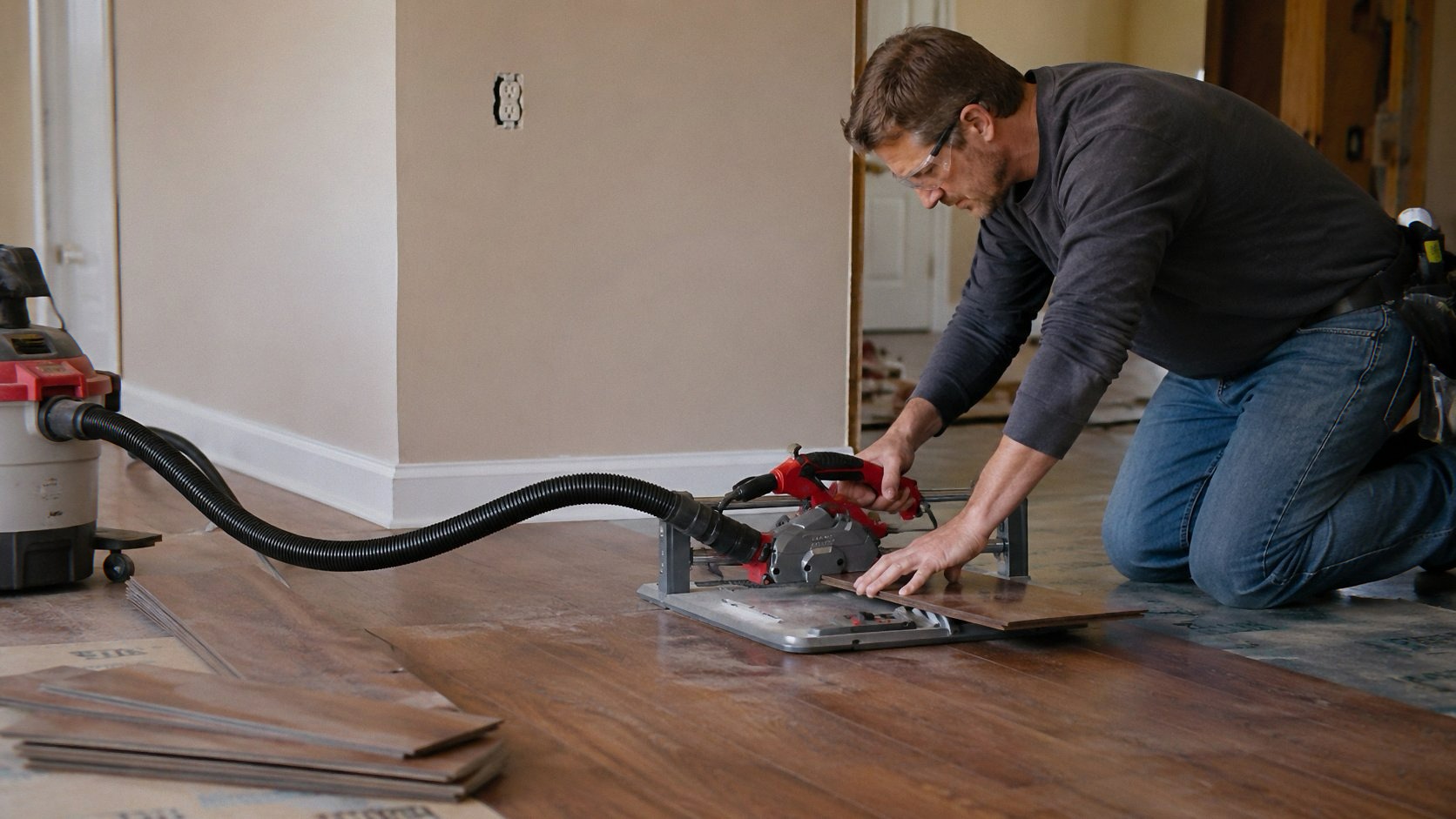
The HydroLock System Is Not a Gimmick
I’m going to be honest — when I first read about the HydroLock water containment system, I rolled my eyes. Every manufacturer claims their saw “minimizes splash” or “reduces mess.” They’re all liars. The water always finds a way out.
Not this one. The design here is a three-wall containment system that wraps around the cutting area. The motor sits outside the water zone, which is smart because it keeps electrical bits away from the spray. The water reservoir is integrated into the base, and it recirculates the water through the pump like any other wet saw. The difference is the deflection.
The blade guard does double duty — it’s not just protecting your fingers, it’s channeling the slurry back into the tray. There’s also a front splash shield that catches the forward spray. I ran a full day of cuts — porcelain, ceramic, some marble remnants — and the floor around the saw stayed dry. Not “mostly dry.” Dry. The only water that escaped was what dripped off the tile edges when I picked them up. That’s it.
Think about what that means. No more mopping after every session. No more slipping hazard in the garage. No more having to explain to your spouse why the driveway looks like a mud wrestling event. The HydroLock system alone justifies the purchase price.
Blade Speed and Cutting Power: Real Talk See Today’s Deal on Amazon
The motor is 7 amps. That sounds small until you realize this is a 7-inch saw, not a 10-inch. The blade spins at 3,950 RPM, which is plenty for anything you’re going to feed through it at this size. I cut 12x12 porcelain tiles into strips for a backsplash and the saw never bogged down. It’s not a race car — you can’t just slam the tile through and expect a clean edge. But if you feed it at a reasonable pace, the cuts are smooth and chip-free.
The arbor is 5/8-inch, which is the standard for this class. You can swap in any 7-inch diamond blade from any reputable brand. I’ve been running a cheap blade I got on sale and it still cuts clean. The included blade is… fine. It’s not great. You’ll want to upgrade eventually, but it won’t embarrass you on the first project.
One thing I’ll note: this saw doesn’t have a laser guide. Some people get weird about that. You know what I say? Lasers on tile saws are garbage anyway. They drift, they lie, and they’re never aligned with the actual cut line. The 3550-02 has a manual rip guide and miter gauge, and honestly, that’s all you need. Mark your tile with a pencil, align it to the blade, cut. You don’t need a light beam to tell you what your eyes already know.
The Fence and Rip Capacity: It’s Fine, Not Perfect
The rip capacity is 14 inches. That means you can cut most tile you’ll encounter without breaking a sweat. The fence is adjustable and locks down with a knob. It’s functional. It’s not precision-ground aluminum with micro-adjustments — it’s a stamped steel fence that does the job. The miter gauge is similar. It has positive stops at 45 degrees, which is where you’ll spend most of your time for any angle cuts.
The table itself is 18 inches wide, which gives you decent support for larger tiles. You’re not going to be feeding a 24-inch slab through this thing — that’s what the big floor saws are for. But for standard residential tile work, the size is right.
Here’s the thing about the fence, and this is where I’ll be honest about a flaw: it can shift if you’re not careful. The locking knob works, but you have to really crank it down. If you’re cutting multiple pieces at the same width, mark your measurements and double-check before each cut. It’s not a dealbreaker, but it’s a quirk you’ll learn to work around.
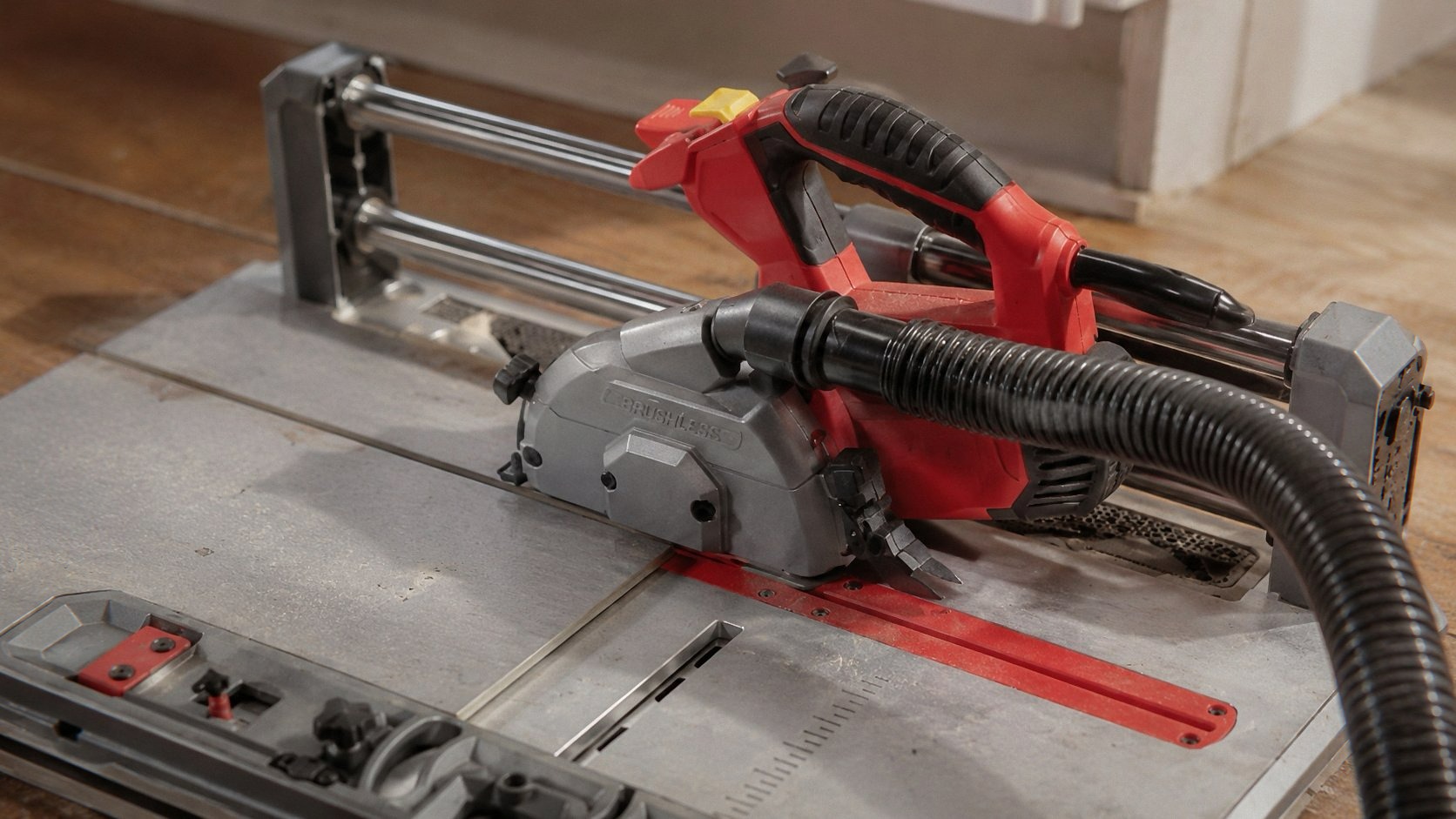
The Pump and Water Flow: Quiet and Reliable
The pump is submersible and sits in the reservoir. It pushes water through a small tube up to the blade guard, which has a spray bar that keeps the blade wet. The flow rate is adjustable via a small valve on the tube. I found the sweet spot around halfway — enough water to keep dust down and the blade cool, but not so much that you’re splashing everywhere.
The reservoir holds about 2.5 gallons. For a typical backsplash project (30-40 square feet), you’ll need to refill it once or twice. That’s normal for this class. The pump has a filter on the intake, and you’ll want to clean it out every time you refill. If you let the sludge build up, the pump will start to starve and the flow will drop. Ten seconds of maintenance saves you an hour of frustration.
One small gripe: the pump doesn’t have a dry-run shutoff. If you forget to fill the reservoir and turn the saw on, the pump will just run dry and eventually burn out. I’ve been burned by this before on other saws, so I’ve trained myself to check the water level every time. If you’re the type who forgets, put a sticky note on the saw.
Setup and Portability: It’s a Tabletop Saw, So Set Your Expectations See Today’s Deal on Amazon
Assembly took about 20 minutes out of the box. The base, the table, the blade guard, the pump — it all goes together with basic hex wrenches that are included. No special tools needed. The instructions are clear enough, and there are only a handful of pieces. If you’ve put together a grill or a bike, you can handle this.
Portability is where this saw wins for me. It weighs 37 pounds. That’s light enough to carry with one hand, and it has a molded handle on top that makes it easy to grab and go. I’ve thrown it in the back of my truck a dozen times, and it’s survived the bumps without any issues. The base has rubber feet that keep it from sliding on a wet surface, which matters more than you’d think.
It’s not a folding stand saw — you need a table or sawhorse to set it on. But for the price, that’s a trade-off I’ll take. A folding stand adds a hundred bucks to the price tag, and most people already have a workbench or a couple of sawhorses lying around.
What It Can’t Do (And Why That’s Okay)
Let’s be clear about the limits. This is a 7-inch saw, so the maximum depth of cut is about 2 inches. You can’t cut through thick stone or pavers. You can’t do plunge cuts. You’re limited to tile, thin stone, and maybe some thin brick if you’re careful. If you need to cut a 3/4-inch thick granite slab, you need a different tool. That’s not a flaw — that’s physics.
The included blade also isn’t great for hard porcelain. It’ll get through it, but you’ll see more chipping on the edge than you would with a premium blade. I swapped in a $30 continuous-rim blade and the difference was night and day. If you’re planning to do a lot of porcelain, factor that upgrade into your budget.
The miter gauge also feels a little cheap. It works, but it doesn’t glide as smoothly as I’d like. You’ll want to lubricate the slots with a little paste wax to keep things moving. Minor annoyance, not a dealbreaker.
The 4.2 Star Rating Makes Sense
I checked the reviews before buying — 1,861 people have weighed in, and the average is 4.2 stars. That’s about right. This saw is good, not perfect. The people complaining are usually the ones trying to use it beyond its capacity or expecting professional-grade precision from a $169 tool. The people raving are the ones who bought it for a weekend project and discovered it handled everything they threw at it.
That’s the crowd I fall into. I’ve used $600 saws that were better, but not five times better. This saw cuts straight, contains the water, and hasn’t given me a single electrical issue in the two years I’ve owned it. The motor starts every time, the pump keeps running, and the blade guard hasn’t cracked or warped.
If you’re a professional tile setter, you’re not buying this. You already have a $1,500 monster rig with a stand and a laser and a water filtration system. But if you’re a homeowner, a DIYer, or a contractor who occasionally does tile, this is the saw you want. It’s the right tool for the right job, priced to not hurt.
A Note on the Switch and Maintenance
One thing I want to flag: the switch is a simple paddle switch on the motor housing. It’s not a magnetic switch with a safety lockout. That means if you’re using this on a jobsite with a GFCI breaker, you might get a surprise when the breaker trips and the saw restarts on its own. Not a huge deal, but worth knowing. If you’re replacing a switch down the road, check out the New (OEM) MK 154310 Tile Saw Switch MK-100 & MK-101 Tile Saws MK-100 & MK-101 — it’s a solid drop-in replacement if you ever need it.
Maintenance is straightforward. After each use, drain the reservoir, wipe down the table, and let the blade dry. The pump needs a periodic cleaning to keep the filter clear. The blade guard should be wiped down to prevent slurry buildup. Ten minutes of care keeps this saw running for years. I’ve put mine through hell and it’s still going strong.
How It Stacks Up Against the Competition
I’ve used the SKIL 3540-02, which is the older brother of this saw. The 3550-02 is a clear upgrade — the HydroLock system alone is worth the extra twenty bucks. The older model splashed like crazy, and I always had to work on a tarp. Not with this one.
I’ve also used the Felker TM-75, which is a much heavier, more expensive saw. The Felker is built like a tank and will last forever, but it’s also two or three times the price. For my money, the Skil gets you 80% of the way there for a fraction of the cost. If you’re doing one or two projects a year, the Skil is the smarter buy. If you’re tiling every week, spring for the Felker. I wrote about that comparison in my SKIL 7-Inch Wet Tile Saw - 3540-02 post if you want the full breakdown.
Final Thoughts, No Fluff See Today’s Deal on Amazon
Look, I’m not going to tell you this is the best tile saw ever made. It’s not. It’s a budget-friendly tabletop saw that does its job without drama. It cuts tile cleanly, contains the water mess, and hasn’t broken on me. That’s a win in my book.
The HydroLock system is the standout feature. If you’re tired of your garage turning into a swamp every time you cut tile, this saw fixes that problem. The rest of the saw is competent, if unspectacular. The motor is strong enough for residential work, the table is stable, and the pump is reliable.
The flaws are minor: the fence can shift if you don’t crank it down, the miter gauge feels cheap, and the included blade is mediocre. None of those stopped me from recommending this saw to friends and family. I’ve bought two of these — one for me and one for my brother-in-law — and both are still running strong.
If you pick one up through the links here, I might get a small cut — doesn’t cost you extra and it helps keep the lights on.
For $169, you’re getting a lot of saw. It’s not the tool you’ll hand down to your grandkids, but it’s the tool that’ll get your bathroom tiled this weekend without making you hate the process. And that’s worth more than the price tag.
Go measure your tiles, mark your cuts, and fire this thing up. The water stays in the tray, the cuts stay clean, and your garage stays dry. That’s the whole game right there.