The first time I tried to cut a 36-inch porcelain plank on my old saw, I had to flip it halfway through. You know the dance—score, flip, align, pray. I got a chipped edge every single time. That’s when I started looking at the big boys. The DEWALT D36000S. The one that costs $1,349 and weighs 91 pounds. The one that apparently can rip a 36x36 tile in half like it’s a stick of butter. I’d been using the D24000 for a while—and I actually wrote about that here—but I needed more capacity. More reach. More “I don’t want to flip a tile ever again.”
So I bought it. And now I’m sitting here, surrounded by tile dust, with a coffee that went cold an hour ago, trying to figure out if I just made a very expensive mistake or the best purchase of my life.
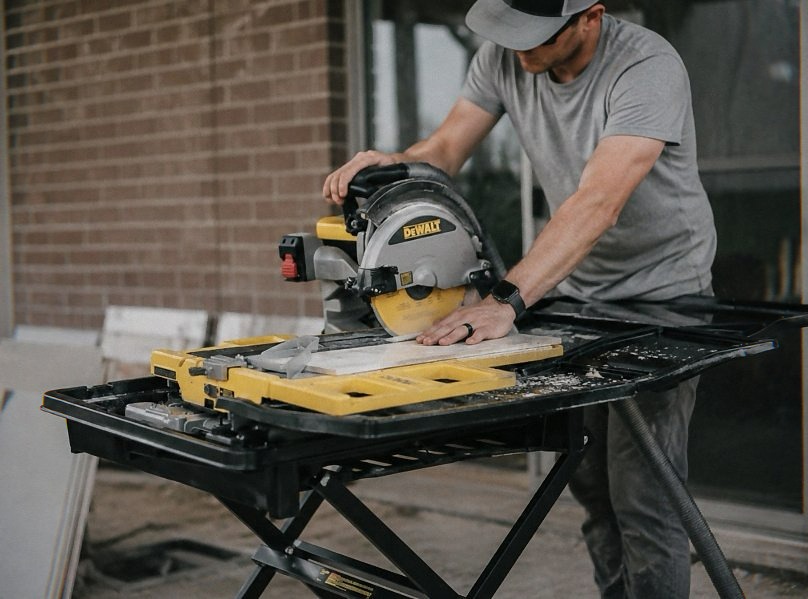
Unboxing: Two Guys and a Tranquilizer Gun
The box arrived. My wife asked, “Is that a refrigerator?” No, honey, it’s a saw. A saw that weighs as much as my 12-year-old nephew. The listing says 91 pounds. That’s without the stand. With the stand, you’re pushing 110. The box was so big I had to open it in the driveway and carry the pieces in separately. I’m not a small guy, but I had to take a break halfway up the steps. My back is still talking to me about it.
Assembly? The manual is still terrible. DEWALT must have hired the same guy who did the D24000 manual. It’s like they want you to suffer through the setup so you appreciate the saw more. I skipped the paper entirely and found a video from some contractor in Texas. He said, “Forget the instructions, they’re useless.” He wasn’t wrong. But once you get the stand locked in and the tub seated, it’s solid. The stand has these beefy legs that don’t wobble, even on my slightly uneven garage floor. I leaned on it hard. Nothing moved.
The Capacity That Made Me Giddy
Let’s talk about the numbers that actually matter. Rip capacity: 37 inches. With plunge, 41 inches. That means you can take a standard 36-inch tile and cut it lengthwise without flipping. You just push it through. One smooth motion. I tested it on a 36x36 porcelain monster, and the saw didn’t even grunt. The 15-amp motor puts out 1,220 MWO (that’s motor wattage output, if you care), and it shows. No bogging. No stuttering. Just a clean, straight line.
Crosscut capacity is 8.5 inches. That’s perfect for cutting 6-inch sills or 8x48 planks at a 30% offset. I have a bunch of those long wood-look planks for my laundry room, and this saw chewed through them like they were cardboard. The cutline indicator and stainless-steel rollers keep accuracy within 1/32 inch over 30-inch cuts. I measured. It’s legit. My old saw would drift by a 16th over that distance—enough to make you curse and re-cut.
Another detail: the width from the column to the cart edge is 28-7/8 inches, so it fits through standard 30-inch doorframes. I wheeled it (carefully) from the garage into the house without taking the door off. That’s a win.
Water Containment: No More Mopping
I used this saw indoors. On a hardwood floor. And I didn’t put down a tarp. That’s how good the water tray system is. The 18x36 and 24x24 tiles are fully contained within the tray coverage, so water stays where it belongs. There are side and rear splash guards that actually work. I did get a little mist on my shoes, but nothing a quick wipe couldn’t fix. Compare that to the D24000, which already had great water management—this one is even better because the tray is larger and the pump delivers more water without spraying everywhere.
Speaking of the pump, I followed the same trick I used on the D24000: drop the pump in a separate 5-gallon bucket of clean water. It keeps the blade clean, reduces clogging, and the water pressure stays consistent. The saw comes with a submersible pump, and it works fine, but muddy water recirculation is never ideal. Just a pro tip.
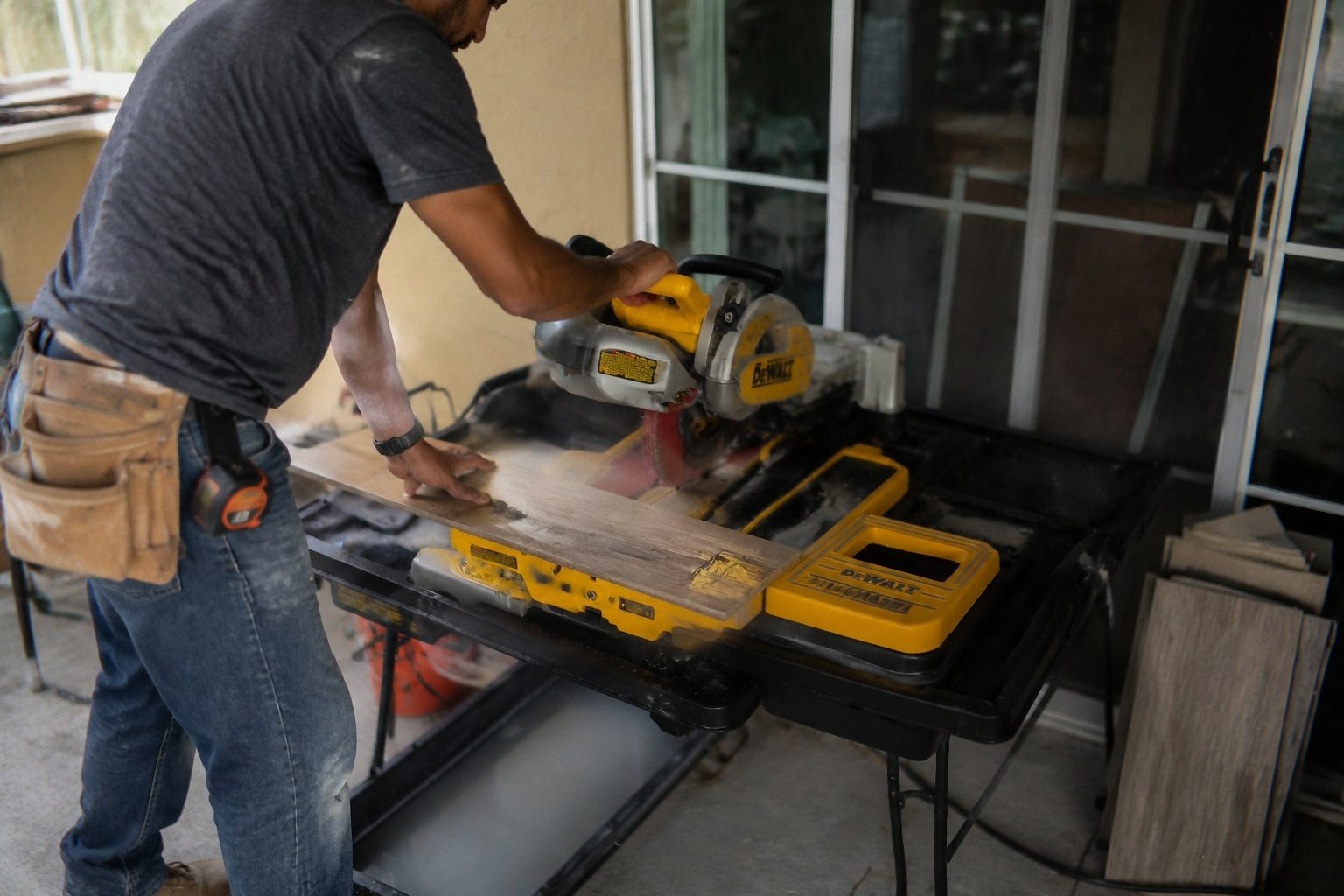
The Blade Saga (Again)
The included blade is a DEWALT diamond blade—standard issue. And like the D24000, it’s fine for rough stuff but not great for finish work. My first cuts on some polished porcelain left small chips along the edge, even at a slow feed rate. I switched to a better porcelain blade (I had a Pearl P5 lying around from the D24000 project), and suddenly everything was smooth and clean. So factor that into your budget. Or just use the included blade for pavers and backer board, and get a premium blade for the nice tile.
One reviewer said the blade settles down after a dozen cuts. Maybe. But I didn’t want to risk chipping expensive tile, so I swapped it out immediately. The saw itself has zero blade wobble—that’s the rigid frame and stainless steel rails doing their job. My cheap rental saw from a few years ago had wobble so bad it tripped breakers. This one is rock solid.
Weight: The Elephant in the Room
Yes, it’s heavy. 91 pounds. You’re not carrying this up three flights of stairs without a dolly. The stand folds, but it’s still bulky. If you’re a contractor with a truck and a helper, fine. If you’re a DIYer moving it from the garage to the backyard once a month, you’ll manage, but you’ll also groan every time. I set it up once and left it in place for the entire project. That’s my advice—find a spot, assemble it, and don’t move it until you’re done. The stand has no wheels, so you have to lift or drag. I strapped it to a furniture dolly for moving between rooms, and that worked okay.
But here’s the trade-off: the weight is what gives it stability. That heavy frame and solid table mean no vibration, no wandering cuts. You trade portability for precision, and for me, that’s a worthy trade.
The Little Things That Annoy and Delight
- The water diverter fitting: A few reviews mention it can clog. I checked mine before first use and found a tiny bit of plastic flash from manufacturing blocking one of the holes. A drill bit cleaned it out in two seconds. Not a big deal, but something to watch.
- The LED cut line indicator: It’s there, but it’s dim. I still rely on pencil marks. Not a dealbreaker.
- The rollers: Smooth as glass. My old saw had sticky spots on the rails—this one glides effortlessly. I can make a 36-inch cut in about 30 seconds, versus the two minutes it used to take with flipping and alignment.
- The noise: It’s loud, but no louder than any other wet saw. Ear protection is a must anyway.
How It Stacks Up Against the MK Diamond 101
I’ve used the MK Diamond 101 tile saw at a friend’s shop. It’s a solid saw, well-regarded, and costs around the same ballpark. But the DEWALT D36000S has a few advantages: the rip capacity is larger (37 vs. 28 inches on the MK-101), the water tray is more contained, and the folding stand is more portable (if you can call 91 pounds portable). The MK-101 has a reputation for being bulletproof, and it is, but it lacks the modern conveniences like the plunge cut capability and the bevel tilt that locks at 22.5 and 45 degrees without accessories. If you’re a pure MK loyalist, you might argue about motor longevity, but I’ve seen DEWALT’s 15-amp motor handle daily abuse for years. Honestly, you can’t go wrong with either, but the DEWALT feels more refined for large-format tile work.
If you’re on the fence between the D36000S and something like the MK Diamond 101, I’d say the DEWALT wins for versatility and capacity. But if you want a saw that’s a bit simpler and you never cut tiles over 24 inches, the MK is a fine choice too.
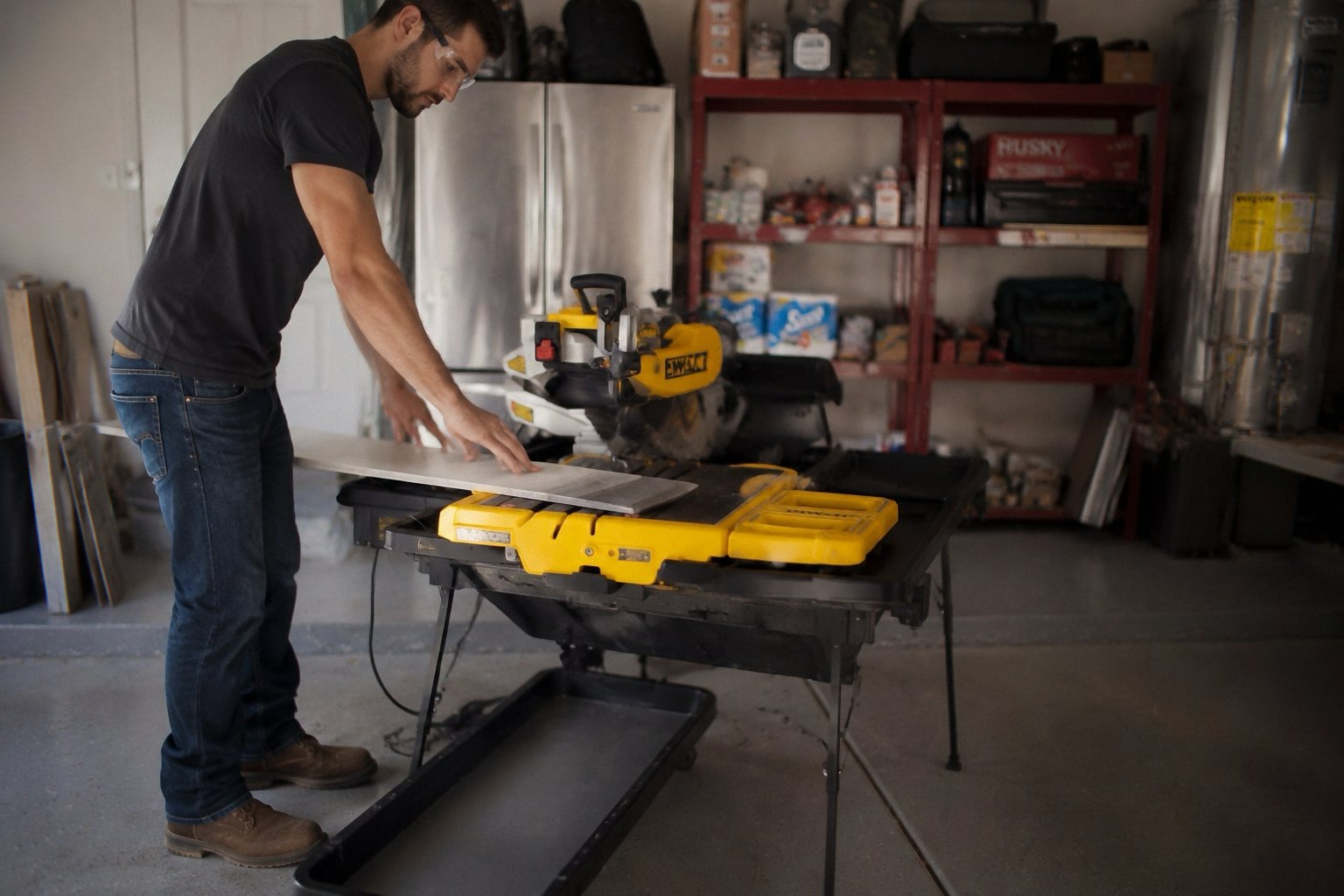
A Weird Personal Discovery
The pump makes this low hum when it’s running. But when the water level drops below a certain point, the tone changes—it gets a little higher, a little more desperate. I caught it once and topped off the bucket just in time. Now I listen for it like a sixth sense. It’s not a feature, it’s just a side effect of the pump design, but I’ve grown to rely on it. Also, the side tray that moves with the cart is great for placing cut pieces to drain. Saves me from dripping water all over the floor.
Who Is This Actually For?
If you’re tiling a standard bathroom floor with 12x12 tiles, this saw is overkill. You’d be fine with the D24000 or even a smaller unit. But if you’re doing large-format porcelain, natural stone, thick pavers, or any job where you need to rip 36-inch tiles cleanly, this is the saw. It saves you time, frustration, and re-do’s. It’s not cheap—$1,349 is a serious investment—but it’s cheaper than renting a saw for multiple long projects, and you get to keep it. I’ve already got a list of future projects just to justify it.
If you grab one through the links here, I might get a small cut — costs you nothing extra and keeps the lights on. DEWALT D36000S Wet Tile Saw on Amazon
The Downsides I Can’t Ignore
- The weight is the biggest con. If you’re a one-man crew, plan your setup carefully.
- The blade is mediocre out of the box. Budget an extra $50–100 for a quality porcelain blade.
- The manual is garbage. You’ll need YouTube or a friend who’s done it before.
- The LED light is weak. Not a dealbreaker, but why bother including it?
- Some units have quality control quirks—like the water diverter flash or slight rail drag. Nothing major, but it’s worth checking everything before you start a job.
- The price is steep. You can find cheaper saws, but they won’t have this capacity or accuracy.
One Last Thing
I used this saw for 200 square feet of 24x24 porcelain and another 300 feet of 8x48 planks. Not a single cut had to be redone. Not one. Every edge was crisp, every angle dead-on. I can’t say that about any other saw I’ve owned. It’s big, it’s heavy, it’s expensive—but it’s also the best I’ve ever used. If you have the budget and the need, just buy it. If you’re on the fence, think about how many times you’ve cursed a bad cut and multiply that by the cost of wasted tile. This saw pays for itself pretty fast.
Anyway, I need to go clean the water tray. There’s a fine layer of porcelain dust that’s starting to look like snow. My dog is sniffing it and sneezing. Time to wrap up.