I stood in the aisle of the home center, staring at the rental counter, doing the math in my head. Two weekends with a pro-grade saw: $180. Or I could buy this little SKIL 3550-02 for $169 and keep it forever. My wife was texting me asking if I’d left yet. The dog was in the car whining. I grabbed the box and walked out. That was three weeks ago. I’ve since tiled a shower, a bathroom floor, and part of a kitchen backsplash. I’m still not sure if I made the right call, but I’m leaning toward yes—with some heavy caveats.
This is the SKIL 3550-02 7-inch wet tile saw. It’s cheap, it’s light, and it’s got something called HydroLock water containment that sounds like a marketing buzzword but actually kind of works. I bought it because I was tired of dragging out the big DEWALT D24000 for small jobs. That thing is a beast, but sometimes you just need to make a few cuts for a half-bath renovation and you don’t want to haul 69 pounds of American steel up from the basement.
So I went small. Maybe too small. Let me tell you how it went. 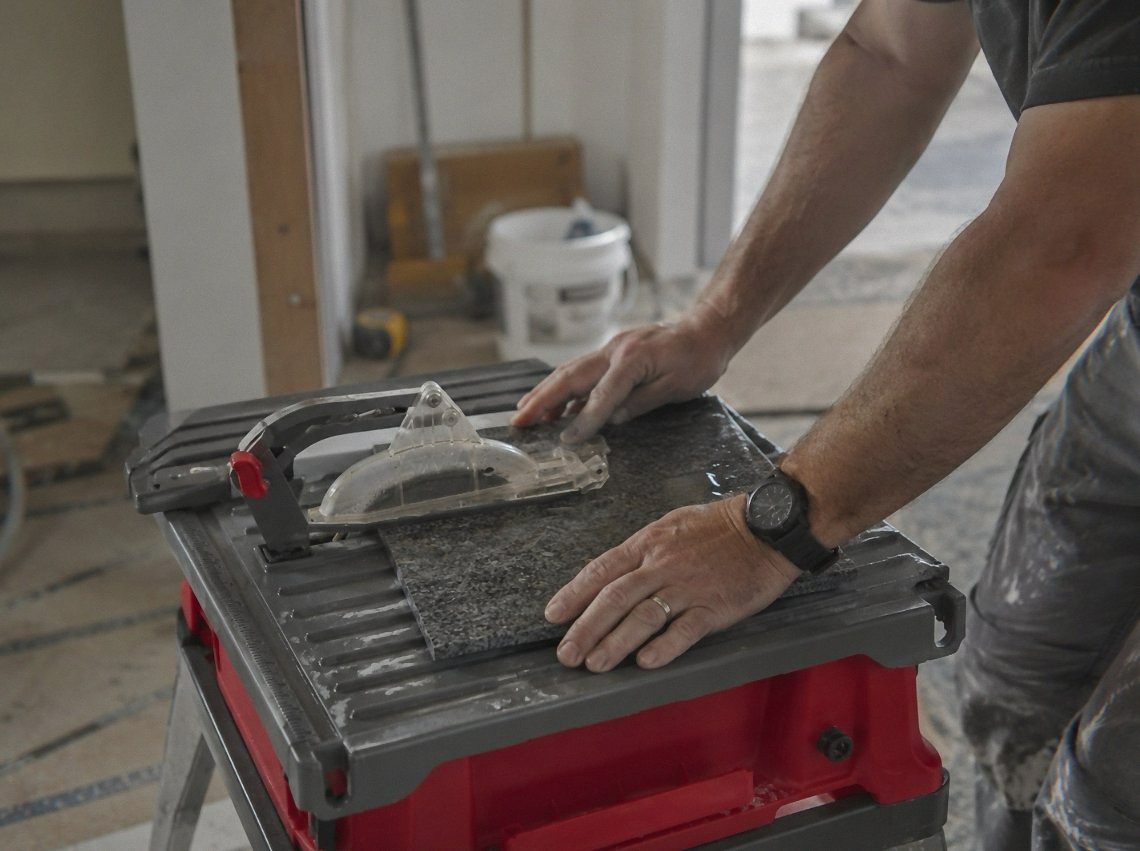
First Impressions: Light Enough to Hold With One Hand
The box is surprisingly small. I carried it up the stairs without breaking a sweat. The SKIL 3550-02 weighs maybe 25 pounds total. You can grab it by the handle and tuck it under your arm like a suitcase. I unpacked it on the kitchen table—my wife was thrilled about that, by the way—and had it assembled in about ten minutes. No tools required. The blade comes pre-installed, the water reservoir is built into the base, and the side extension slides out with a satisfying click. Compare that to the DEWALT D36000S, which took me an hour and a YouTube tutorial just to figure out which bolt went where.
The aluminum table top is rust-resistant, which is nice because this saw is going to get wet. Really wet. The HydroLock system is basically a rubber guard that wraps around the blade and channels water back into the reservoir. It’s not perfect—more on that in a minute—but it does a decent job of keeping the spray contained.
Cutting Performance: Surprisingly Capable, But Demands Patience
I tested the SKIL 3550-02 on three materials: ceramic subway tile, 12x24 porcelain plank, and some thick marble mosaic sheet. The ceramic cut cleanly, as long as I didn’t rush. The feed rate is critical. Push too fast and the motor bogs down, the blade chatters, and your cut edge chips like crazy. I found a rhythm—slow and steady wins the race—and got smooth cuts with minimal breakage.
The 12x24 porcelain was more challenging. The saw can technically handle tiles up to 18 inches if you use the side extension, but that extension is flimsy. I cut a 24-inch tile in half by flipping it halfway through, and the cut line was clean but the alignment was off by maybe 1/16 of an inch. Acceptable for baseboard, not acceptable for a visible edge. The limitation is the blade guard: it gets in the way of long cuts. You have to flip large tiles, and flipping introduces error.
The marble mosaic sheet was the worst. The saw vibrated the tiny pieces, causing micro-chips along the edges. I ended up using a diamond hand pad to clean up the rough spots. Not ideal.
That 7-inch blade is small. The max depth of cut is maybe 1-1/4 inches, so thicker materials are out of the question. If you’re cutting pavers or 1.5-inch thick stone, look elsewhere. This saw is strictly for wall tile and floor tile up to about half an inch thick.
The HydroLock System: Marketing Meets Reality
HydroLock. Sounds like a sci-fi forcefield. In practice, it’s a black rubber shroud that hugs the blade and keeps water from spraying in your face. And honestly? It works pretty well. I used this saw on a bathroom floor adjacent to a bedroom with carpet. No water damage. A little splatter on the blade side, but the top of the table stayed dry. The side extension caught most of the runoff.
But here’s the thing: if you’re cutting a large tile at an angle, the shroud doesn’t seal perfectly. Water drips off the side of the table. And if the reservoir gets low, the pump starts sucking air and the spray pattern goes crazy. You have to refill often. The reservoir holds maybe a gallon and a half, and you’ll go through it fast on a big job.
Also, the pump is cheap. It’s a little submersible unit that sits in the reservoir. It’s quiet, but it’s also weak. Don’t expect a high-pressure jet like you get on the DEWALT saws. It trickles enough water to keep the blade cool and suppress dust, but it won’t blast away debris. I found myself stopping every few cuts to clear the sludge from the reservoir.
Bevel Cuts: The 45-Degree Letdown
The SKIL 3550-02 has a bevel capacity of 0, 22.5, and 45 degrees. That sounds great on paper. In practice, the 45-degree lock isn’t accurate. I set it to 45, cut a test piece, and measured—it was about 40 degrees. Off by five full degrees. That’s enough to ruin your miter joints on a shower niche. I had to shim the tile under the table to get the right angle. Not a dealbreaker for a $169 saw, but annoying. If you need precise bevels, you’ll be doing some trial and error or reaching for a different tool.
The adjustability of bevel is something I addressed in my D24000 review too, but that saw locks in tight. This one? Eh, close enough for DIY.
The Adjustable Rip Fence and Meter Gauge: Questionable Design
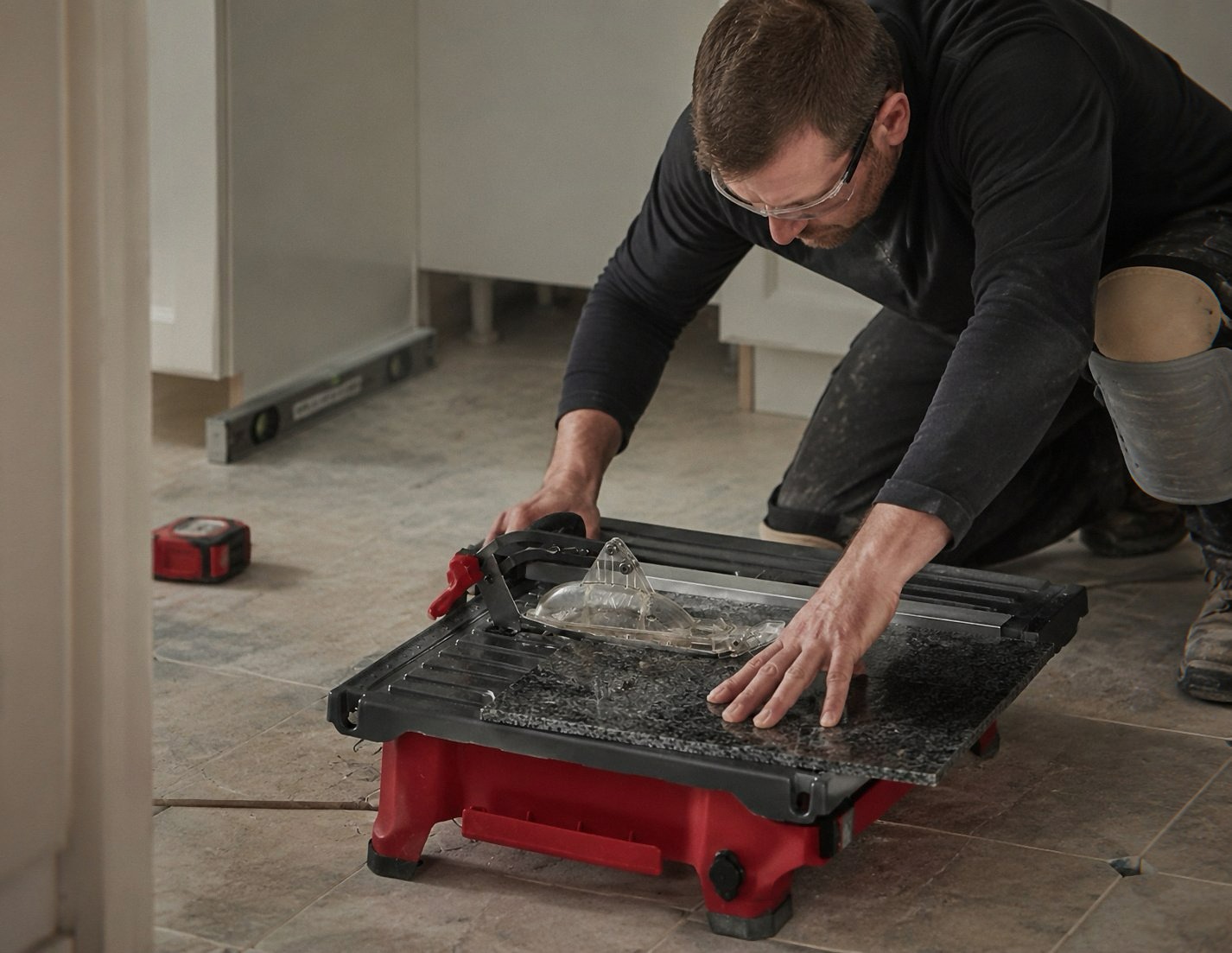
The rip fence has a meter gauge for straight and miter cuts. It’s a simple plastic piece that slides along a metal rail. It’s functional, but it’s not precise. The rail has a little play in it, so your cuts can drift a few degrees if you’re not careful. I relied on pencil lines and freehanded most of my cuts. The fence is useful for rough sizing, but don’t trust it for critical dimensions.
That said, I did appreciate the sliding side extension. It gives you extra support for larger tiles, even if it doesn’t extend far enough for anything over 18 inches. For shower tile work, it’s fine.
The Motor: Weak, But Gets the Job Done
The motor is the weakest part of this saw. It’s a small 7-amp unit, and it stalls easily. If you push the tile too fast, the motor bogs down, the blade stops spinning, and you have to back off and restart. One reviewer mentioned you could probably stop the blade with your hand—I wouldn’t test that, but I believe it. On a thick porcelain tile, you have to be gentle. Slow feed rate, consistent pressure, don’t force it.
It’s loud, but not as loud as the big 15-amp saws. I could still hear the radio over it, which was a nice change.
One weird thing: the motor doesn’t have a soft start. When you pull the trigger, it lurches forward. I nearly dropped the tile on my first cut. You get used to it, but it’s jarring.
Portability and Storage: Where It Shines
This is where the SKIL 3550-02 wins. It’s small enough to store on a shelf in the garage. I keep it next to my miter saw, and it barely takes up any space. The water reservoir drains easily. The cord wraps around a built-in hook. The blade wrench stores in the reservoir, though I’d prefer if it clipped to the outside—digging through water to find a wrench isn’t fun.
I carried this saw up and down a flight of stairs at least a dozen times during my renovation. No back pain. No need for a hand truck. It’s the opposite of the DEWALT D36000S, which requires a team of two and a dolly.
The One Thing That Drove Me Crazy
The water pump stopped working halfway through a cut. I panicked, thought the saw was dead. Turned out the intake was clogged with tile dust and little bits of porcelain. I pulled it out, rinsed it off, and it worked fine. But I had to do that three times over the course of the project. The filter is a cheap foam thing that doesn’t catch everything. If you buy this saw, keep a bucket of clean water nearby and rinse the pump often.
Also, the reservoir is hard to clean. It’s molded into the base, so you can’t just pop it out and hose it down. You have to tilt the saw and use a rag to wipe out the sludge. It’s messy. I ended up using a small squeegee and a sponge.
Who Is This Saw For?
If you’re a contractor doing 10 jobs a week? No. Get the DEWALT D24000 or D36000S. The SKIL 3550-02 won’t hold up to daily abuse, the motor is weak, and the accuracy isn’t pro-grade.
If you’re a DIYer tiling one bathroom, a laundry room, or a small kitchen backsplash? Yes, this saw will do fine. It’s cheap, it’s portable, and it cuts straight enough for grout lines to hide the imperfections. You just have to be patient, change the water often, and accept that you’ll need to hand-finish some edges.
If you’re on a budget and can’t afford the big saws, this is a solid entry point. I’ve seen some folks use it for thousands of square feet with a new blade each project. But they’re the exception, not the rule.
If you grab one through the links here, I might get a small cut — costs you nothing extra and keeps the lights on. SKIL 3550-02 Wet Tile Saw on Amazon
The Verdict Nobody Asked For
I’m keeping this saw. It’s not perfect. The bevel is off, the motor stalls if you look at it wrong, and the water pump clogs faster than a 40-year-old sink drain. But for $169, it’s incredibly useful for small jobs. I’ll still drag out the D24000 for big projects, but for quick cuts on subway tile or a small backsplash, this little guy does the job.
My dog is asleep in the corner, my coffee is cold, and my back doesn’t hurt from carrying a 90-pound saw up the stairs. That’s a win in my book. The tile cuts aren’t perfect, but grout covers a multitude of sins.