I had a granite countertop offcut that was too big for the wet tile saw. Too heavy to lift onto the DEWALT D24000, too unwieldy to manage on a table saw. I needed to cut it in half, and I needed to cut it where it sat—on the floor, in the middle of my garage, with a hose running from the utility sink. I’d used circular saws with diamond blades before, but the dust is apocalyptic. You breathe that stuff and you’re tasting concrete for a week. So I looked for something wet. Something small. Something that wouldn’t require me to buy a 200-pound saw for one job.
That’s when I found the Makita 4101RH. It’s a 5-inch masonry saw. It’s basically a circular saw built for stone, with a water hookup that turns it into a miniature wet cutting station. It costs $406.33, which is a weird price point—too much for a tool you’ll use once, but cheap enough that you might buy it instead of renting for a long project. I bought it. I used it for a patio and a countertop. Let me tell you, it’s a mixed bag.
First Cut: Is This a Saw or a Wet Vacuum?
The 4101RH is built like a Makita. That’s a good thing. The motor is 7.9 amps, which is a lot of power for a 5-inch blade. The housing is sturdy, the handle is comfortable, and the whole thing weighs maybe 10 pounds. It feels like a well-made angle grinder that decided to grow up and get a wet head.
You set it up by attaching the 15 feet of tubing to a garden hose or a faucet adapter. The water flows through a pressure regulator and a valve, then drips onto the blade via a little plastic nozzle. The idea is that the water suppresses the dust, cools the blade, and washes away debris. And it works—kind of.
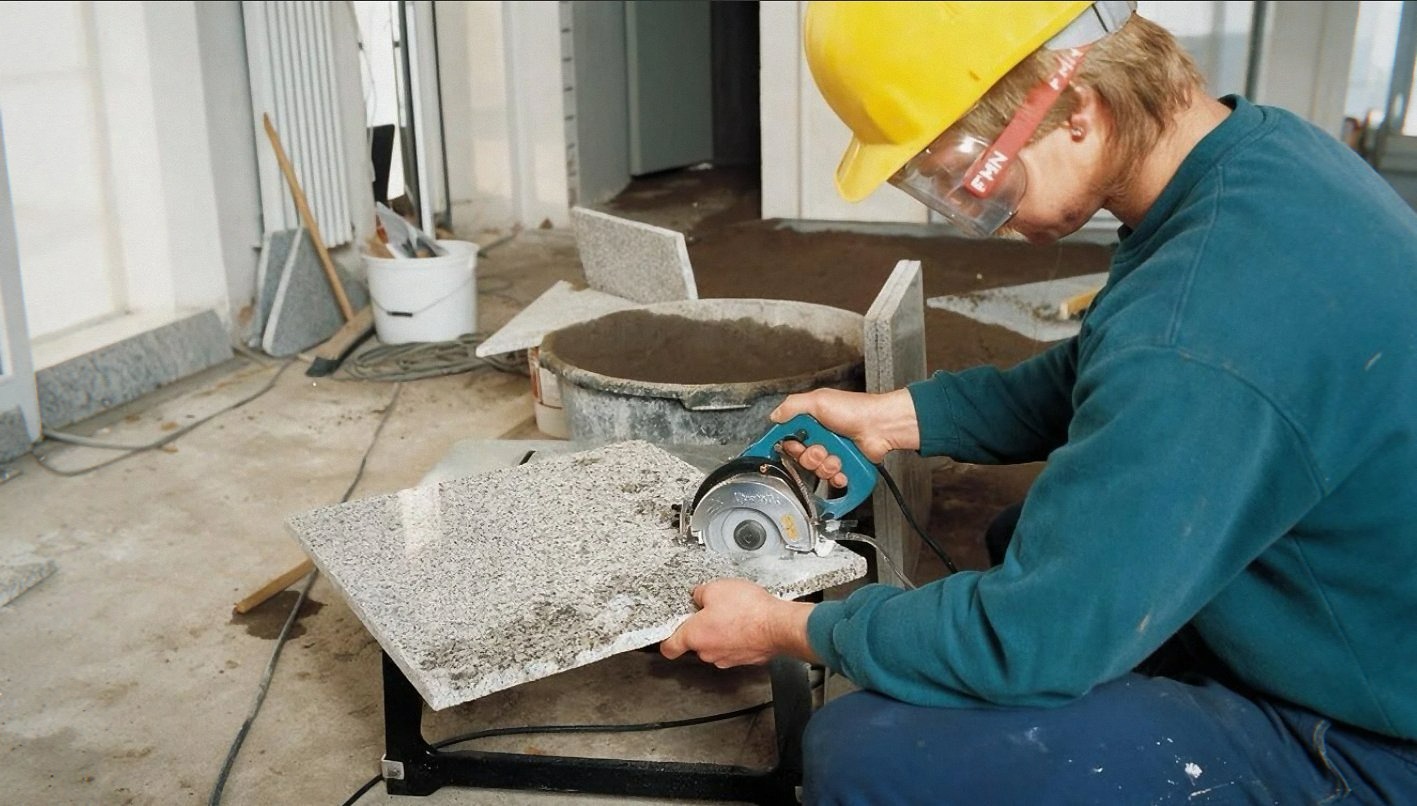
I hooked it up to a hose and made my first cut on a 1.25-inch thick granite slab. The saw chewed through it like it was soapstone. No dust. Just a smooth stream of slurry running off the cut line. It was almost magical. But the water connection is flimsy. It’s a plastic fitting that screws into the blade guard, and it feels like it’ll snap off if you look at it wrong. One reviewer mentioned adding extra strapping and tying the hose to the power cord to reduce snagging. I did the same. It helped, but it’s not a design I trust long-term.
The cut capacity is 1-5/8 inches at 90 degrees and 1 inch at 45 degrees. That’s deep enough for most pavers and thinner countertop slabs. I cut through granite, concrete pavers, and some thick porcelain tile from a previous project. The 4101RH handled all of them with authority. It didn’t bog down, and the motor never overheated, which is a testament to that 7.9-amp motor.
The Dust-Free Promise
This saw is for wet cutting. That’s the whole point. You connect water, and there’s no dust. I used it indoors to cut some stone trim for a fireplace, and the water contained the mess completely. My wife didn’t complain about the smell or the dust—just the puddle of gray water on the tarp. That’s a win in my book.
But the water system is finicky. The pressure regulator dial is small and hard to adjust. The valve doesn’t always seal tight. And the nozzle gets clogged if your water has sediment. I had to clean it out with a pin twice during the patio job. Compare that to the iQ Power Tools dry cut saw, which has better dust control for indoor work but costs more and doesn’t cool the blade as effectively. This Makita is the better choice for stone—you need that water to keep the blade alive.
What It’s Good For
The Makita 4101RH is a specialist. It’s not for everyday tile work—that’s what the SKIL 3550-02 or the DEWALT D24000 are for. This is for cutting materials that are too big, too heavy, or too awkward to bring to a stationary saw. It’s for cutting pavers in the middle of a patio. It’s for trimming a granite countertop in place. It’s for cutting a hole in a concrete slab for a pipe.
If you’re a contractor who does masonry work, this saw makes sense. If you’re a DIYer building a patio, it’s a great investment—cheaper than renting a demo saw for a week, and you get to keep it. If you’re tiling a shower, skip it. Buy a real wet saw.
The Switch Saga
Here’s the big problem. A significant number of reviews mention the power switch failing. The switch gets stuck in the on position. You pull the trigger, and it doesn’t click back off. You have to unplug the saw to stop it. That happened to a reviewer after 15 minutes of use. It happened to someone else after two uses. I’ve used mine for a few weeks and the switch is fine, but I’m waiting for it to fail. It’s a known issue. Makita makes great tools, but this switch is a weak point.
The GFCI plug on the cord is a nice safety feature—it trips if the saw gets wet or if there’s a short. But it’s bulky and gets in the way. And the cord is short, so you’ll likely need an extension cord, which kind of defeats the purpose of a GFCI if the extension isn’t protected.
The Foot Design Makes Straight Cuts Tricky
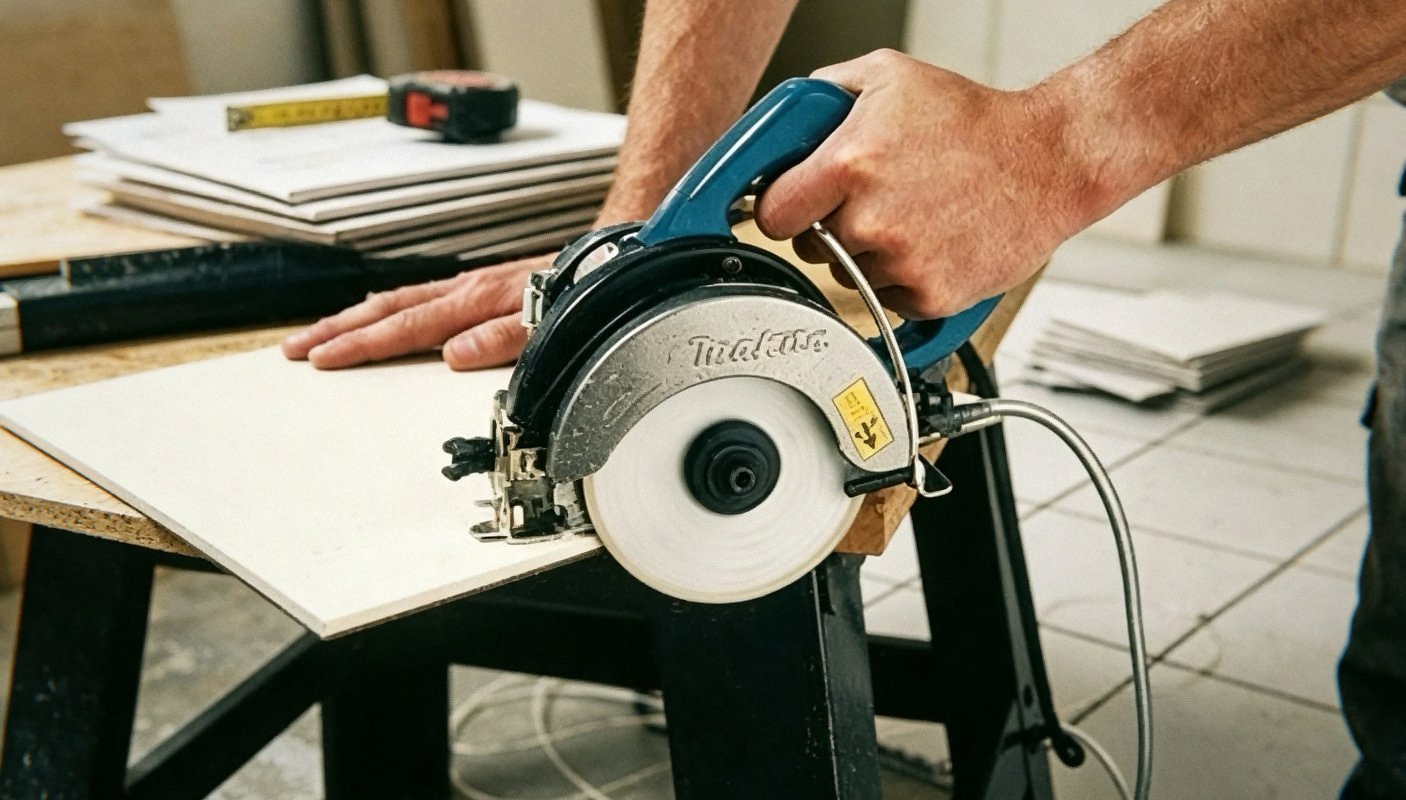
The base plate, or foot, is only on one side of the blade. That’s typical for circular saws, but this is a masonry saw, and you’re usually cutting along a line on a large, heavy slab. The blade is on the right side of the saw, and the foot doesn’t extend far enough to give you a good reference. I had to clamp a straightedge to the stone and run the saw’s foot against it. It worked, but it’s not ideal. For plunge cuts or freehand work, it’s fine. But for long, straight lines, you need a guide.
The Cutting Capacity Is Deeper Than It Looks
The blade is 5 inches, but the depth of cut is 1-5/8 inches. That means you can cut through most pavers in a single pass. I cut 1.5-inch thick concrete pavers without issue. The saw’s motor didn’t stall, and the blade didn’t overheat. I was using a Makita continuous-rim diamond blade, which is necessary for wet cutting. A segmented blade might chip the edges more. The saw comes with a high-speed steel blade, but for masonry, you’ll want a diamond blade. I had to buy one separately, which added to the cost.
A Strange Comfort
The saw vibrates less than I expected. It’s smooth for a circular saw. And the water keeps the blade cool, so you don’t get that acrid, burning smell you get from dry-cutting masonry. Instead, you get a wet, earthy smell—like a rainy day at a quarry. I kind of like it. It’s the smell of progress. Also, the lock-on button is convenient for long cuts. You press it, and the saw stays running without holding the trigger. That’s nice for your fingers.
Who Should Buy This?
I’d recommend the Makita 4101RH if you’re doing outdoor stonework, cutting pavers, or trimming countertops. It’s a good tool for a niche job. If you’re a professional tile setter, you’re better off with a dedicated wet saw like the DEWALT D24000 or the D36000S. The Makita is a supplement, not a replacement.
If you’re a DIYer doing a single patio, I’d consider renting a similar saw or buying a cheap angle grinder with a diamond blade and a dust shroud. But if you have multiple projects, this saw pays for itself. It’s $406, which is less than renting a demo saw for a week in some places.
If you grab one through the links here, I might get a small cut — costs you nothing extra and keeps the lights on. Makita 4101RH 5” Masonry Saw on Amazon
The Bottom Line? There’s No Summary. Just This.
The Makita 4101RH is a good saw with some annoying flaws. The motor is powerful. The wet cutting works. The dust suppression is effective. But the water fitting is cheap, the switch might fail, and the base is awkward for straight cuts. If you need to cut stone in place, it’s a useful tool. If you’re expecting a polished, perfect experience, you’ll be disappointed. It’s Makita, so it’s better than most, but it’s not their best design.
I used it for a patio and a fireplace surround. It saved me from hauling stones to a tile saw. It saved me from dust. And it made me a little nervous every time I pulled the trigger, wondering if it would be the last time. So far, so good. But I’m keeping the receipt.
Now I need to go rinse the slurry off my shoes. It’s everywhere.